Author: Kyle

  • A peaceful morning walk

    A peaceful morning walk

    Some hikes stay with you because they are exciting. Others stay with you because they remind you how good it feels to slow down.

    The walk to Leigh Lake in Grand Teton National Park was one of those hikes.

    Before we even settled into the trail, the park made sure we understood whose home we were entering. Grizzly bear warning signs appeared often enough to keep us paying attention. Then we came across a handmade sign warning about a “habituated bull elk.” I couldn’t help but smile. It was a gentle reminder that the animals here make their own rules.

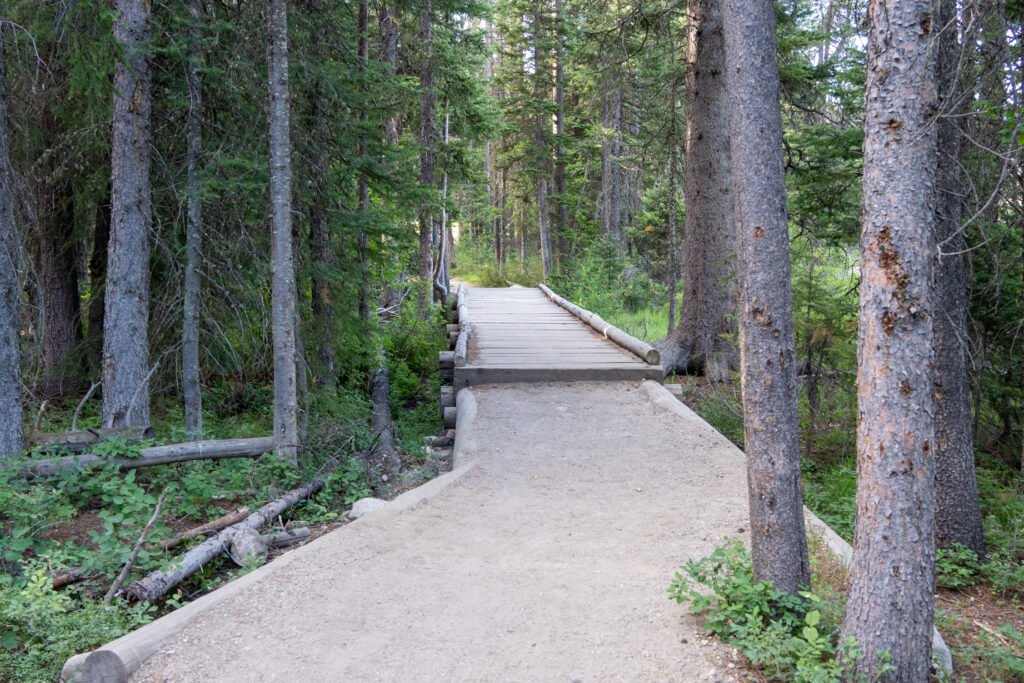
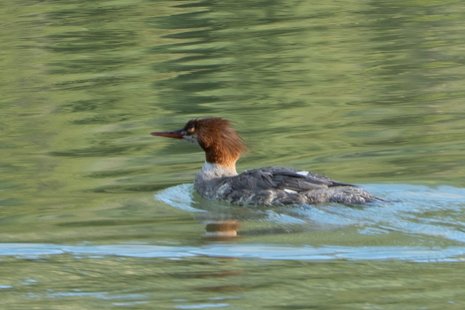
    As we continued through the forest, the warnings slowly faded into the background, not because they weren’t important, but because the woods had a way of calming every other thought. The scent of pine filled the cool air. Small animals moved through the brush where we could hear them but rarely see them. Along String Lake, waterfowl called to one another, adding a quiet soundtrack that fit the morning perfectly.

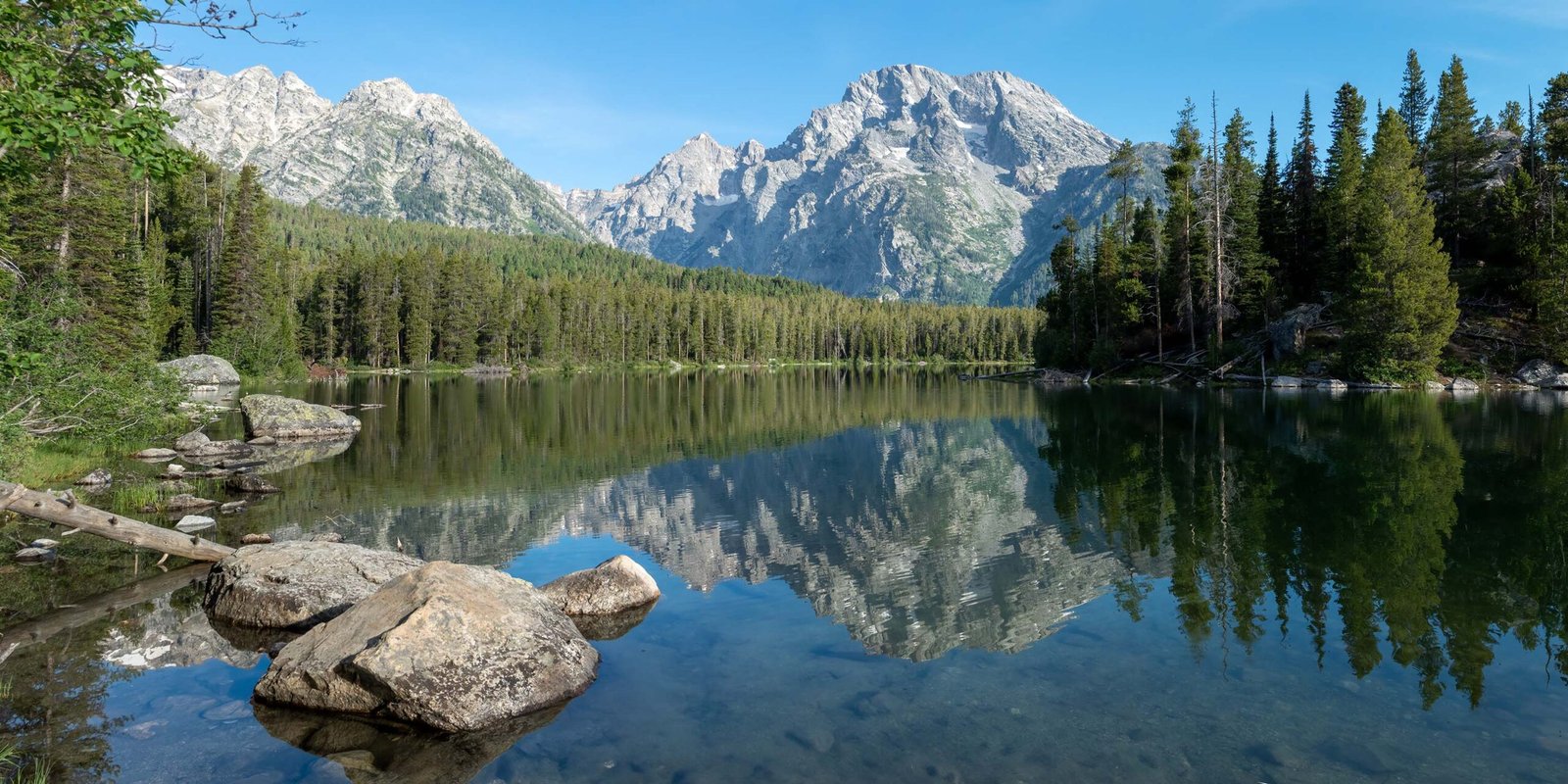
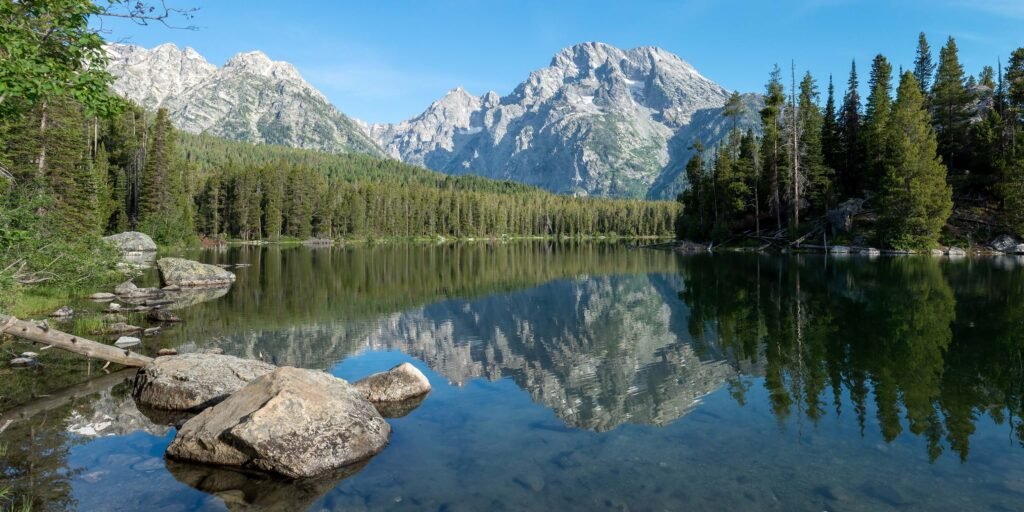
    When Leigh Lake finally came into view, everything seemed to stop.

    See on Etsy

    The Tetons stood tall above the shoreline, their reflection resting on water so calm it looked almost unreal. The bright blue sky stretched across both the mountains and the lake, making it difficult to tell where one ended and the other began.

    I took my time setting up the camera. There wasn’t a reason to hurry. Some photographs are made with careful planning. Others happen when you simply give a beautiful place enough time to work on you.

    This image reminds me that peace isn’t always something we find. Sometimes it’s something we notice after we’ve been still long enough to let the world settle around us.

    A quick reminder for anyone visiting places like this, wildlife warning signs are there for a reason. Always respect park regulations, keep a safe distance from animals, carry appropriate safety equipment, and follow all National Park safety guidelines. Protecting wildlife and yourself helps preserve these remarkable places for everyone.

    If this photograph brings even a small sense of that quiet mountain morning into your home, then it has done exactly what I hoped it would.

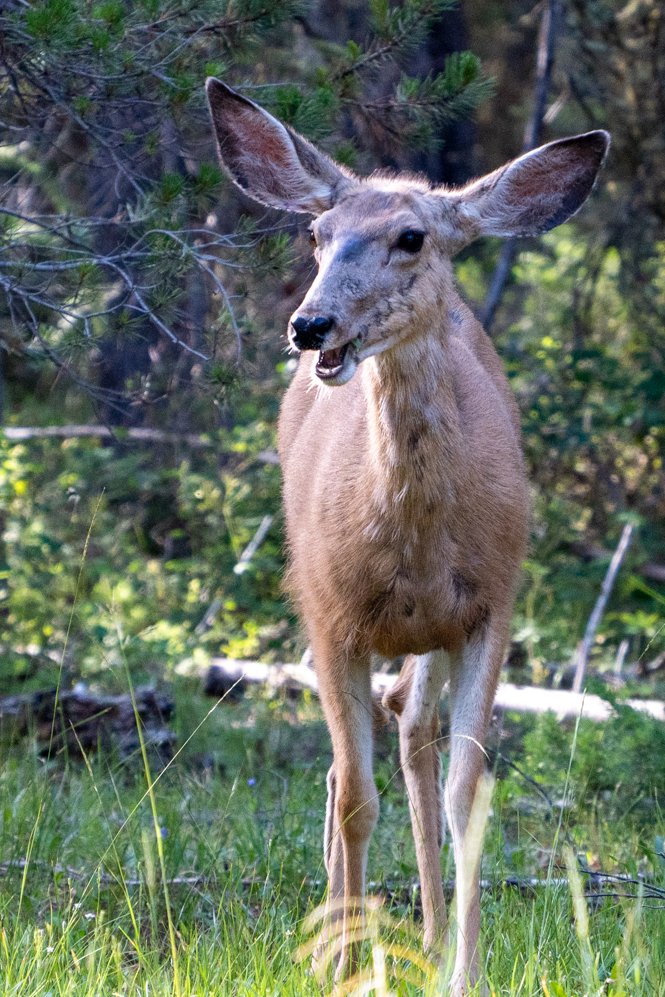
    BTW – We never saw the elk, just a hungry Blaktail Deer.

  • Our First Night in Glacier

    The Best Light Arrived After Everyone Else Had Left

    Before our first trip to Glacier National Park, I wasn’t sure what to believe.

    People talk about Glacier with almost mythical excitement. Every article calls it breathtaking. Every photographer says it’s a place you’ll never forget. After hearing that for years, I wondered if reality could possibly live up to all the praise.

    It did.

    Just not in the way I expected.

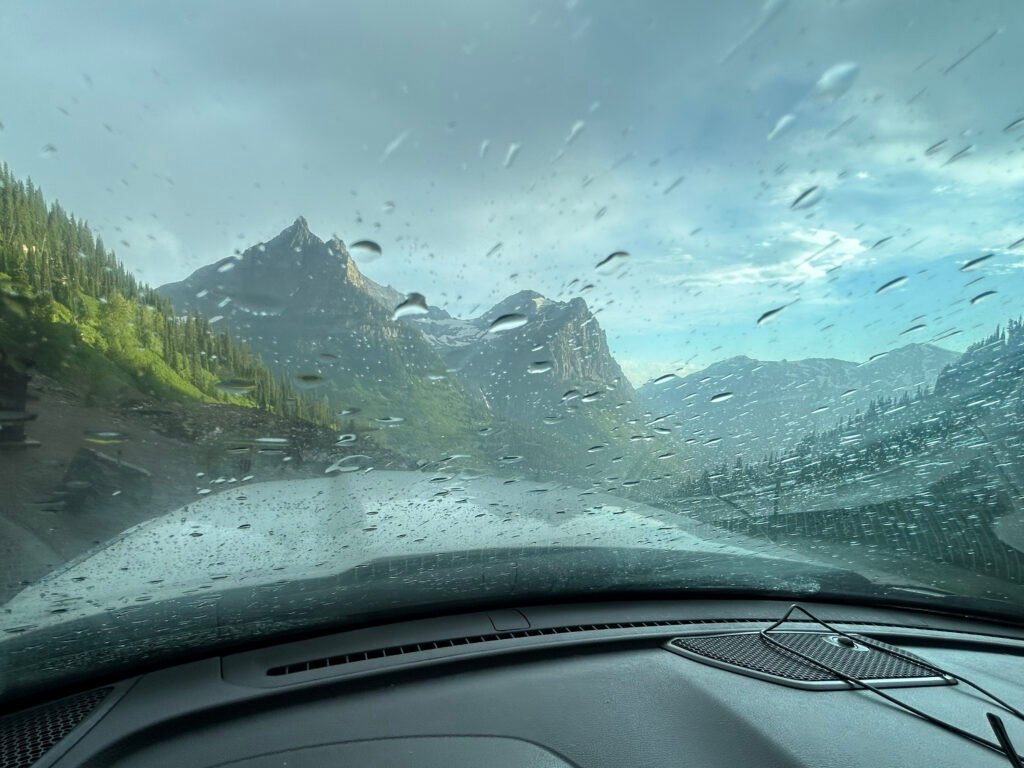
    That evening a storm rolled through the park, hiding the peaks behind thick clouds and sending many visitors back toward their hotels. We waited it out. There wasn’t much else to do except hope the weather would change its mind.

    In the middle of the Storm on Going to the Sun Road

    Eventually it did.

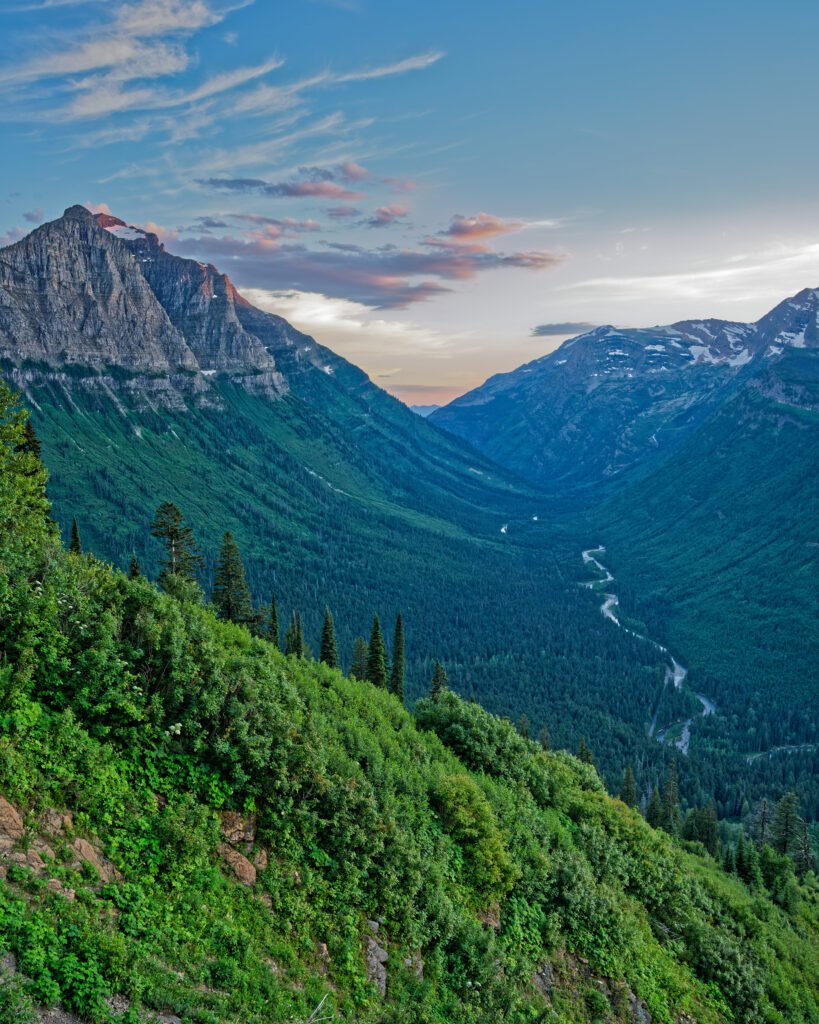
    As the rain drifted away, the clouds began to lift, and soft evening light spilled across the valley. The mountains looked freshly washed. The winding river caught the fading light as it twisted through miles of dark evergreen forest. The air smelled clean, almost sweet, and the whole landscape seemed to take one long, quiet breath.

    Anita looked out over the valley and smiled.

    “I think the storm made it better,” she said.

    I couldn’t argue.

    Standing there, I realized Glacier wasn’t simply beautiful because of its towering peaks or famous roads. It was beautiful because it refused to perform on anyone else’s schedule. The best moments couldn’t be planned. They had to be earned with patience and a little faith that one more hour might make all the difference.

    Looking back, our first visit to Glacier wasn’t anything like we had imagined. Somehow the stories had been true, yet they still fell short. No photograph, no travel guide, and no postcard prepared us for how the place actually felt.

    Sometimes the most memorable landscapes aren’t the ones that greet you with perfect weather. They’re the ones that wait until the storm has passed, then quietly remind you that the world often saves its finest moments for those who choose not to leave too soon.

    See this image on Etsy

  • Looking Through the Branches

    Looking Through the Branches

    There are days when wildlife photography feels like a treasure hunt, and there are days when it feels more like a lesson.

    This photograph happened somewhere in between.

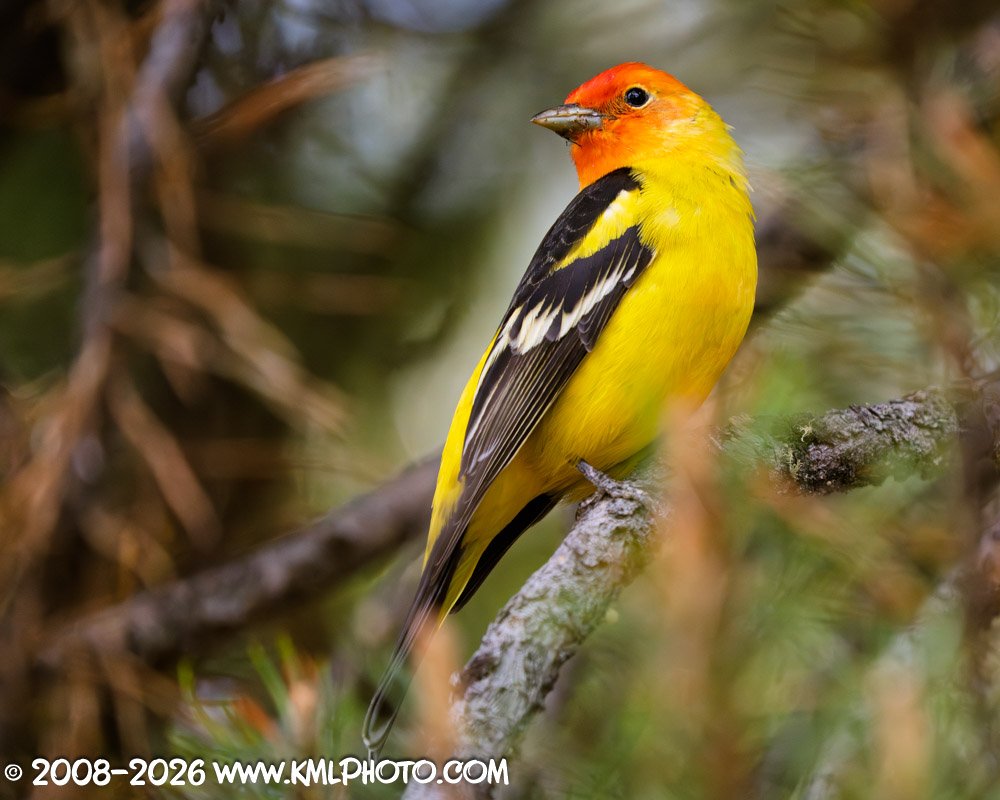
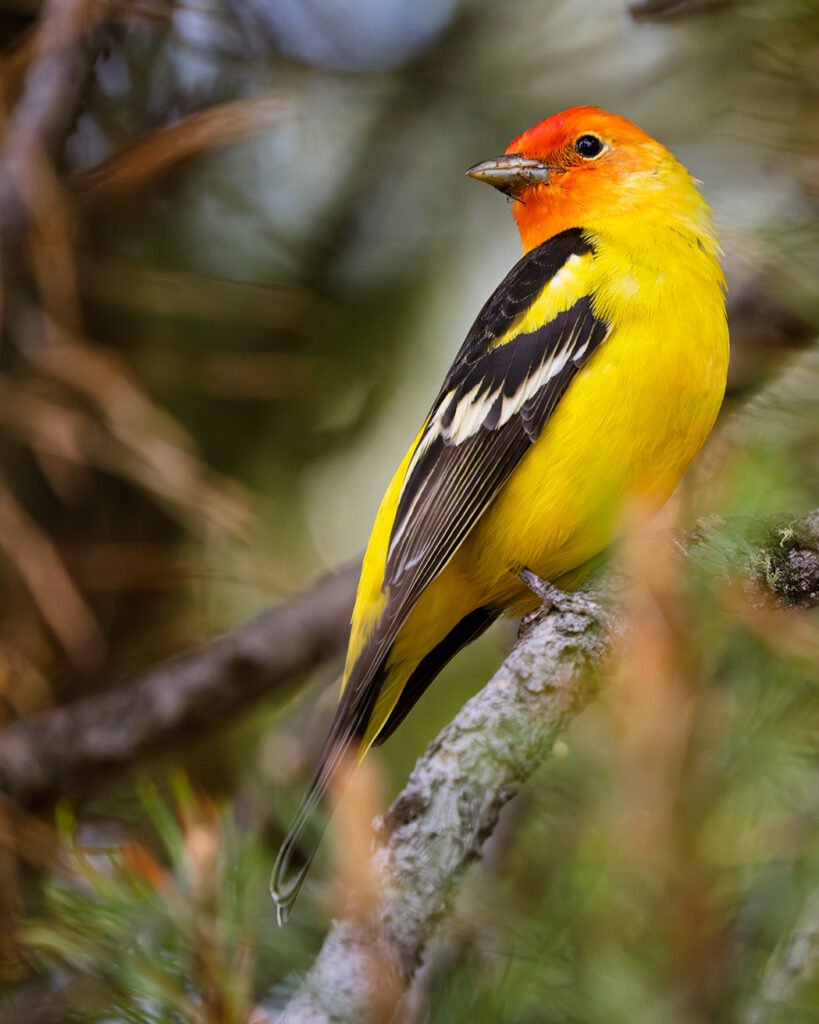
    I was walking near String Lake in Grand Teton National Park on a bright summer day. The mountains were doing their usual job of stealing everyone’s attention, but I found myself looking up instead of out. A few birds were moving through the trees, and then I caught a quick flash of brilliant yellow and red.

    A Western Tanager.

    For a few seconds it disappeared behind a maze of pine branches. I could have kept walking, but something told me to stay put.

    Eventually it settled just long enough for me to make this photograph.

    When I reviewed the image later, I noticed something interesting. The branches partially covered the bird’s body. My first thought was the same one many photographers have.

    “I wish the branches weren’t there.”

    The longer I looked, though, the more I realized they belonged in the picture.

    After all, that’s exactly how we experience wildlife. We don’t usually find animals standing in perfect light with an uncluttered background. Most of the time we’re peeking through leaves, around tree trunks, or between branches. That’s what makes the encounter feel real.

    The branches don’t hide the bird. They invite you into its world.

    Photography has taught me that patience often matters more than expensive equipment. I’ve spent hours waiting for “the perfect shot,” only to discover that the imperfect one carries the better story.

    I remember fishing with my dad when I was a kid. We’d sit quietly beside a lake, sometimes catching very little. I complained more than once that nothing was happening. He would just smile and remind me that nature doesn’t perform on command.

    He was right.

    The older I get, the more I appreciate moments that can’t be planned. A colorful bird appears for ten seconds. Light slips through the trees in just the right way. A breeze moves a branch at exactly the wrong, or maybe the right, moment.

    Those are the photographs I remember.

    When people hang nature photography in their homes, I don’t think they’re just decorating a wall. They’re bringing home a reminder to slow down, notice the small things, and spend a little more time looking instead of rushing.

    This Western Tanager may have been hidden among the branches, but maybe that’s the point.

    Life’s most beautiful moments rarely step into the open. They’re usually waiting just beyond whatever is blocking our view.

    https://www.etsy.com/listing/4532874104/western-tanager-in-late-afternoon-light

  • The Quiet Gift of an October Sky at Bryce Canyon

    The Quiet Gift of an October Sky at Bryce Canyon

    There are moments in photography when you’re not really chasing a picture anymore. You’re simply keeping a promise to yourself.

    That night in Bryce Canyon, I stood in the cold for nearly two hours, wondering if I’d lost my mind. My fingers had long since stopped cooperating, my coffee had become an unpleasant science experiment, and the silence had settled in so completely that even unzipping my camera bag sounded too loud.

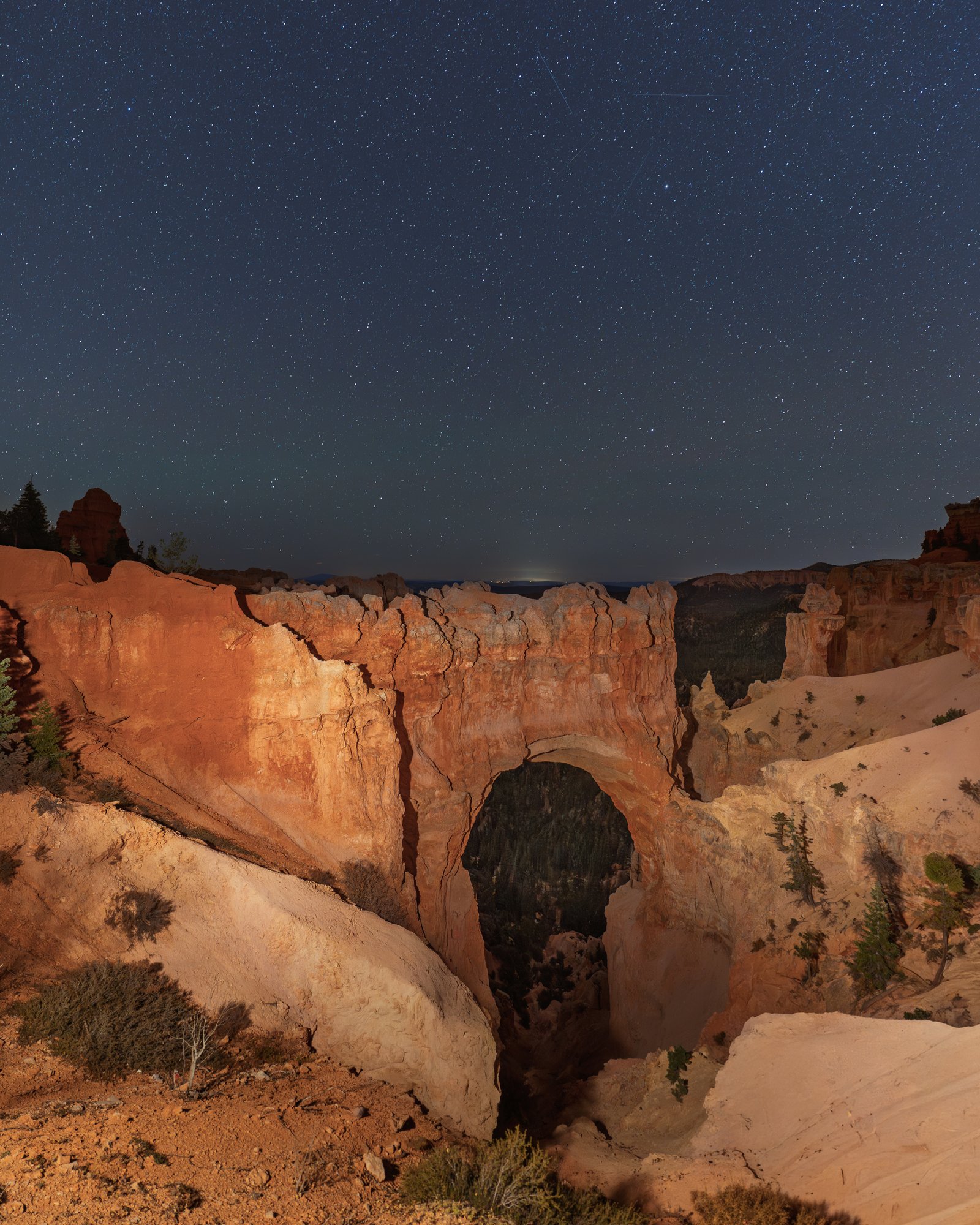
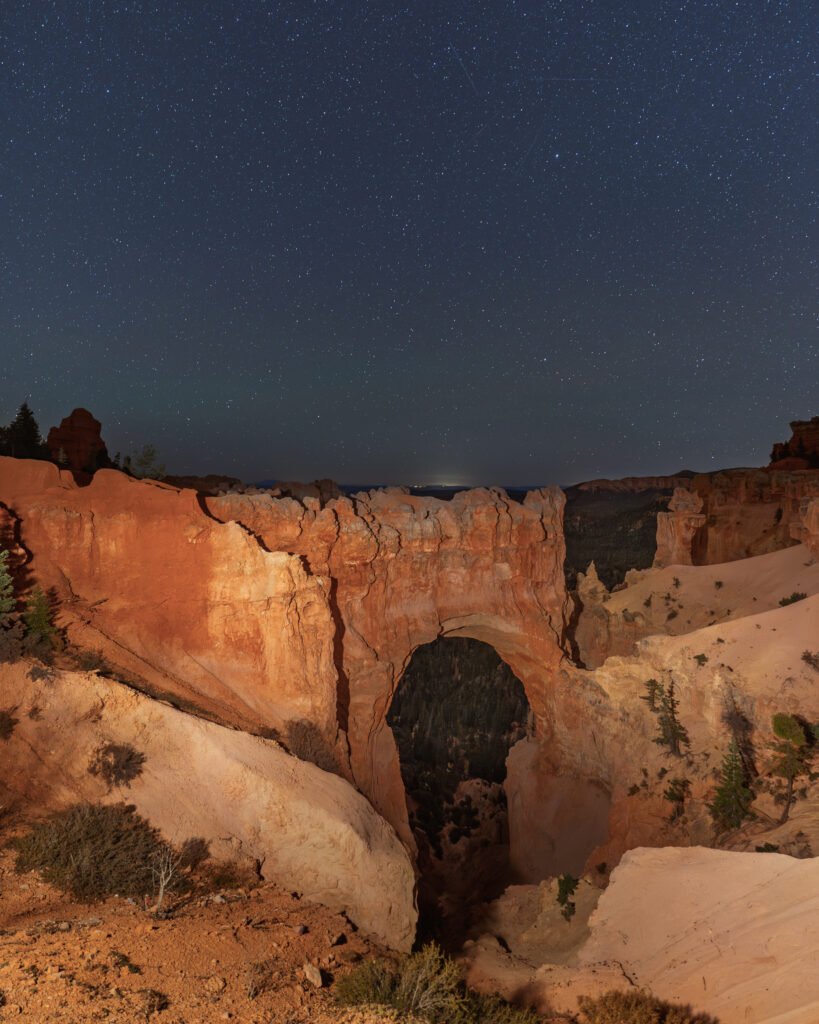
    Natural Bridge stood patiently in front of me, its warm sandstone glowing beneath a small splash of light while thousands of stars slowly gathered overhead. The canyon didn’t seem like a national park anymore. It felt ancient, untouched, almost as if I’d wandered onto another planet and somehow forgotten to be afraid.

    Most photographers dream about photographing Bryce in spring, when the Milky Way stretches boldly across this part of the sky. I’ve been there for that show, and it’s spectacular. But October tells a different story. The Milky Way slips quietly off to the left, less interested in being the star of the evening. It lets the canyon breathe on its own.

    I’ve always appreciated people who don’t need to dominate every conversation. Maybe landscapes are the same way.

    While I waited, I thought about an older gentleman I once met at an overlook. He carried a camera older than some photographers I’ve met. He smiled and said, “The best light usually arrives just after you’ve convinced yourself to pack up.” I’ve remembered those words more often than I’d expected.

    Photography has become less about collecting beautiful places and more about collecting patient moments. Every trip reminds me that nature doesn’t care about my schedule, my expectations, or whether I drove hundreds of miles hoping for perfect conditions.

    Sometimes the reward isn’t finding the biggest galaxy or the brightest stars. Sometimes it’s discovering that quiet has its own kind of brilliance, and realizing that maybe we shine a little brighter ourselves when we stop trying so hard to be noticed.

    See this image on Etsy: https://www.etsy.com/listing/4505627865/bryce-canyon-night-sky-print-natural

  • A walk in the Hoh Rain Forest

    A walk in the Hoh Rain Forest

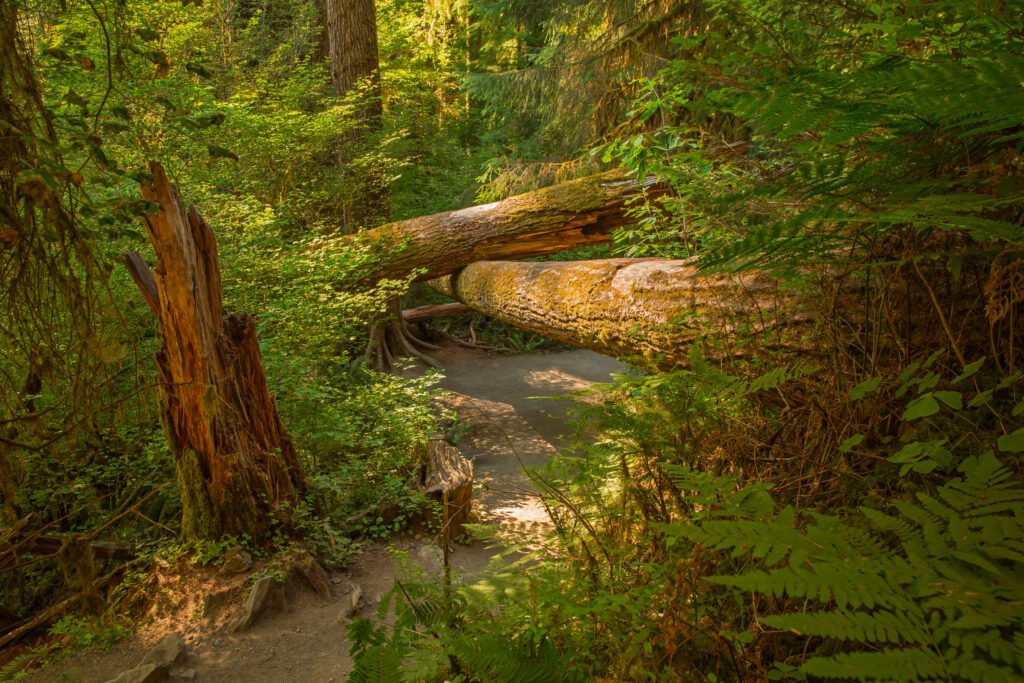
    I was close to giving up and walking back to the car for a lukewarm cup of coffee. The Hoh Rainforest had already tested my patience. It’s a beautiful place, but it doesn’t make photography simple. Moss hangs from every branch, the air feels thick, and the ground looks like a thousand years of plants all growing on top of each other. Everything around you feels alive, but that doesn’t mean it always makes a good picture.

    I had spent most of the morning trying to set up shots that fell apart as soon as I lifted the camera. One area was too busy, another had barely any light, and nothing seemed to come together. It reminded me of trying to take pictures of my kids when they were small. The second they noticed the camera, the calm moment vanished.

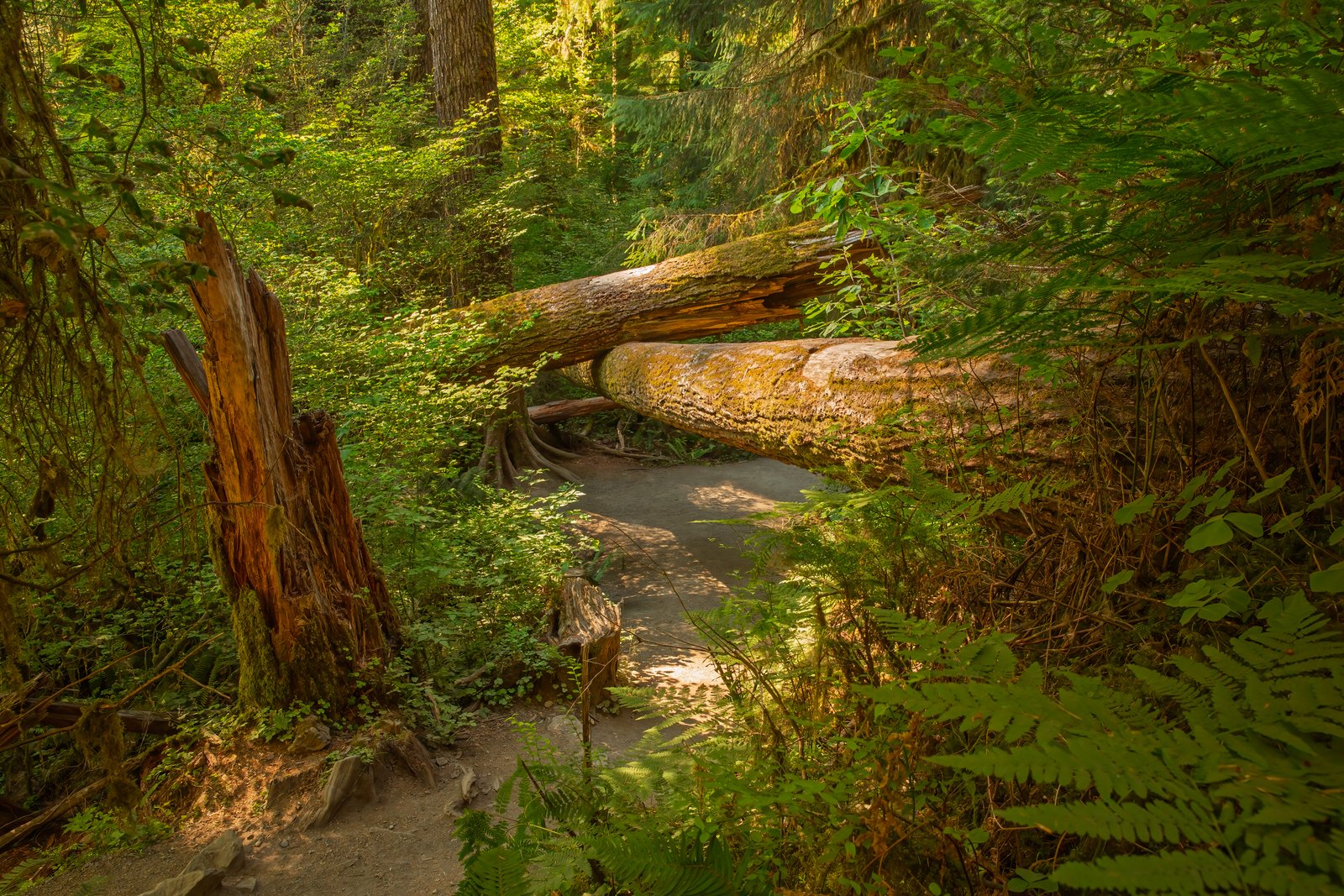
    So I kept walking, not expecting anything special. Then I saw a narrow path I’m sure I hadn’t noticed before. Two fallen trees leaned over the opening like a crooked doorway. I ducked under them and stepped onto the trail, half wondering if I would find a nice photo or trip and twist an ankle instead. The path curved uphill, soft and quiet under my boots. For some reason I don’t fully understand, I stopped halfway up and turned around.

    That’s when the sky opened.

    The morning sun broke through for only a few seconds, but it was enough to change everything. The greens around me glowed bright and fresh. The moss looked like it had been waiting all year for that single flash of light. I rushed to set up my tripod, hoping the sun would hold on just a little longer.

    I caught the shot just in time.

    Moments like this don’t show up on command. They tend to arrive right when you’ve stopped hoping for anything at all. Maybe that’s the forest’s quiet test, to see if you’ll stick around long enough for the magic to happen.

  • Death Valley Day One – (we can sleep when were dead)

    Death Valley Day One – (we can sleep when were dead)

    I sometimes joke that travel days have a way of stealing a little dignity from you. By the time we reached Furnace Creek after three flights, a cab ride across Vegas, and two hours of squinting at desert roads in a rented camper, I wasn’t sure if I wanted to unpack my gear or just collapse face first into the nearest patch of sand. But exhaustion has never stood a chance against good light, and the February sun dropping toward the Panamint Range made the choice for me.

    Checking in at the campground felt like moving underwater. The woman behind the counter was cheerful in a way I couldn’t quite process, and the clip of the pen sounded oddly sharp. Maybe that’s what happens when you’ve been awake for twenty hours. Everything gets louder except your brain. I remember glancing at the sky and noticing the shadows getting longer, and that was enough to snap me back into photographer mode. My wife gave me the knowing look she’s perfected over decades of these adventures, the one that silently says, “We’re going, aren’t we?” We were.

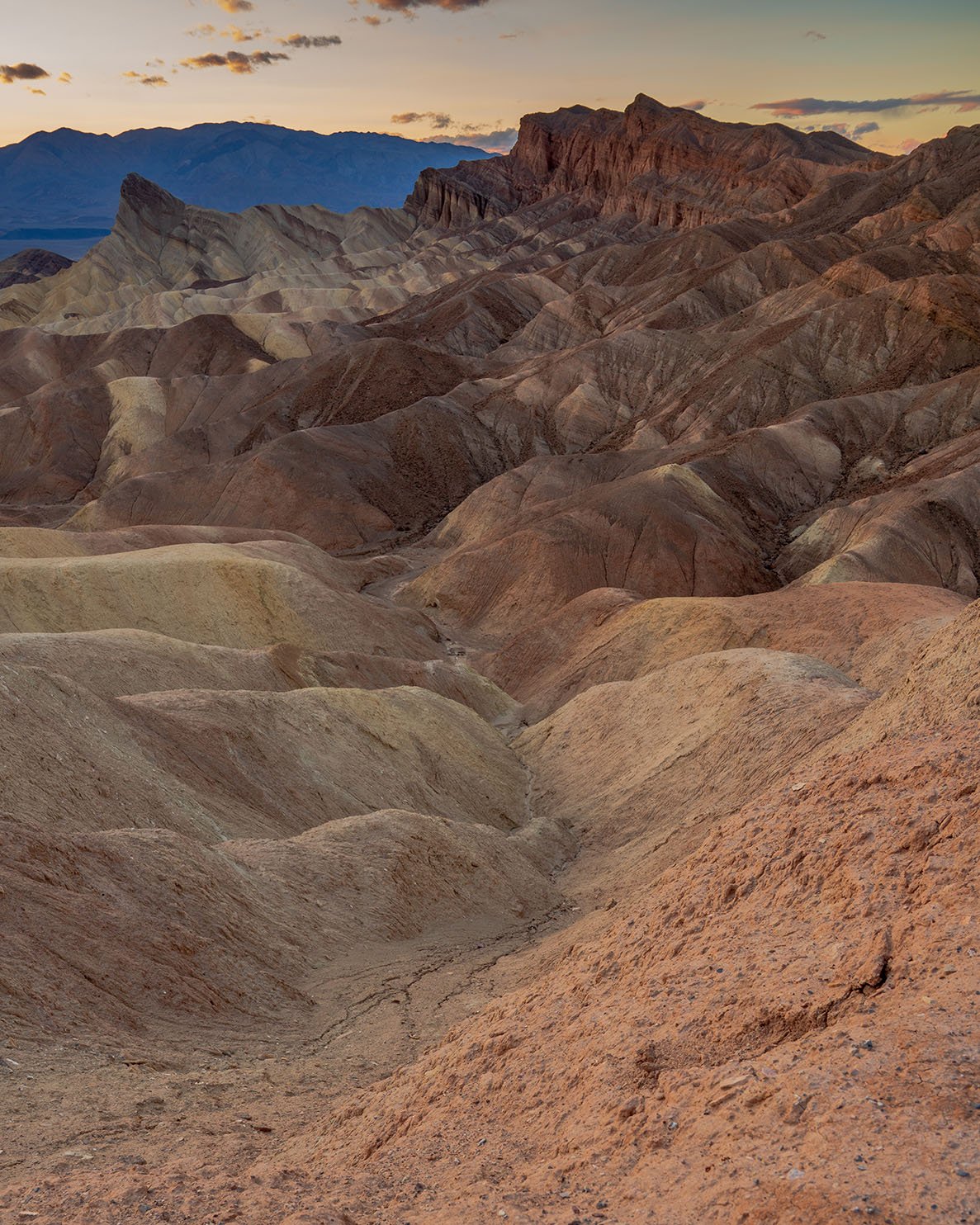
    Zabriskie Point was the only place close enough to reach before the color drained out of the landscape. The drive felt quicker than it probably was, mostly because the adrenaline had kicked in and I’d stopped feeling the stiffness in my legs. When we got out of the camper, the breeze hit my face and carried that dry, almost sweet desert scent that always makes me feel like I’ve stepped into a memory I can’t quite place.

    The short walk up the path gave us a view that somehow managed to wake me up more effectively than any nap could’ve. The badlands stretched out in folds and ridges, each one catching the late light in a slightly different way, like the earth was turning its face toward the sun one last time. There’s no polite way to say this, but I forgot how tired I was. Completely forgot. The excitement of seeing a new landscape for the first time doesn’t leave much room for complaints.

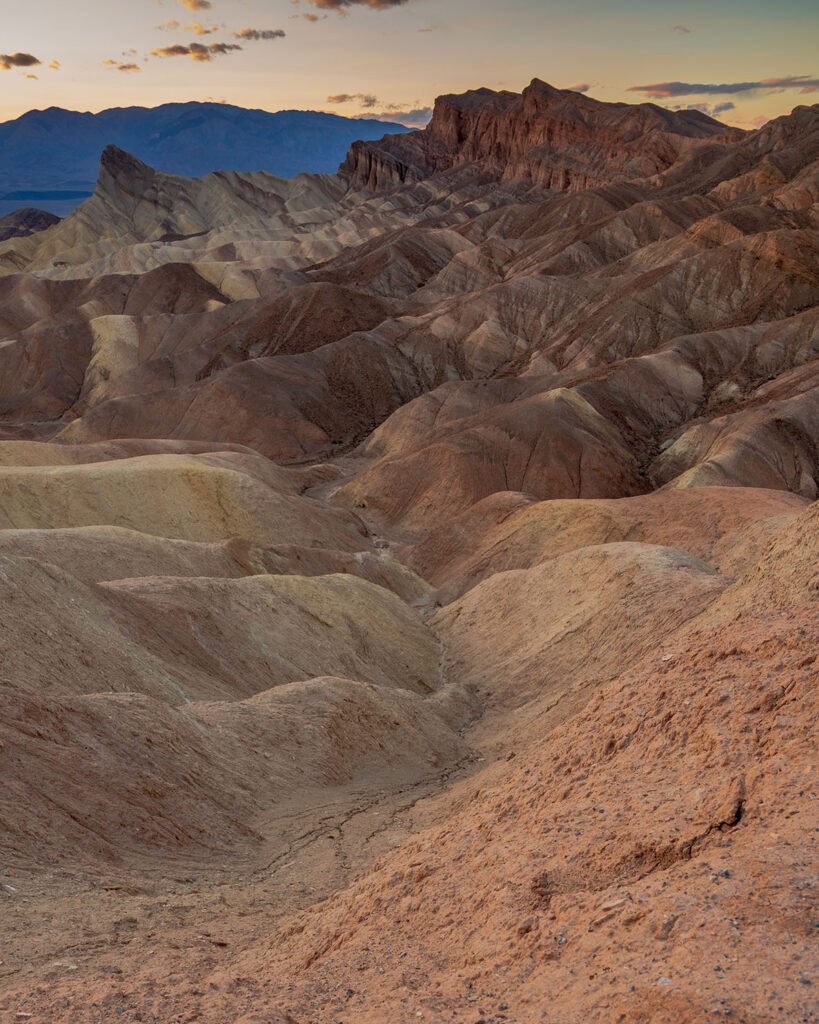
    I spotted the composition almost instantly. A vertical frame with the foreground pulling the eye right into the heart of the valley. Clean, simple, honest. Sometimes I agonize over angles and framing, but that moment felt easy, like the land had already done the heavy lifting and I was just there to take notes. I fired a few test shots to settle my hands, then set up the tripod before the sun could slip any lower.

    Looking back, the shot feels like more than a travel memory. It carries the weight of tired bones and stubborn joy, of choosing a moment even when your body wants a nap, and of remembering who you are when you’re standing in front of something bigger than you.

    Click to see and shop this image.

    Here is a collection of other images from this trip.

  • My 42 Year Photo

    My 42 Year Photo

    A Promise Beneath the Arches

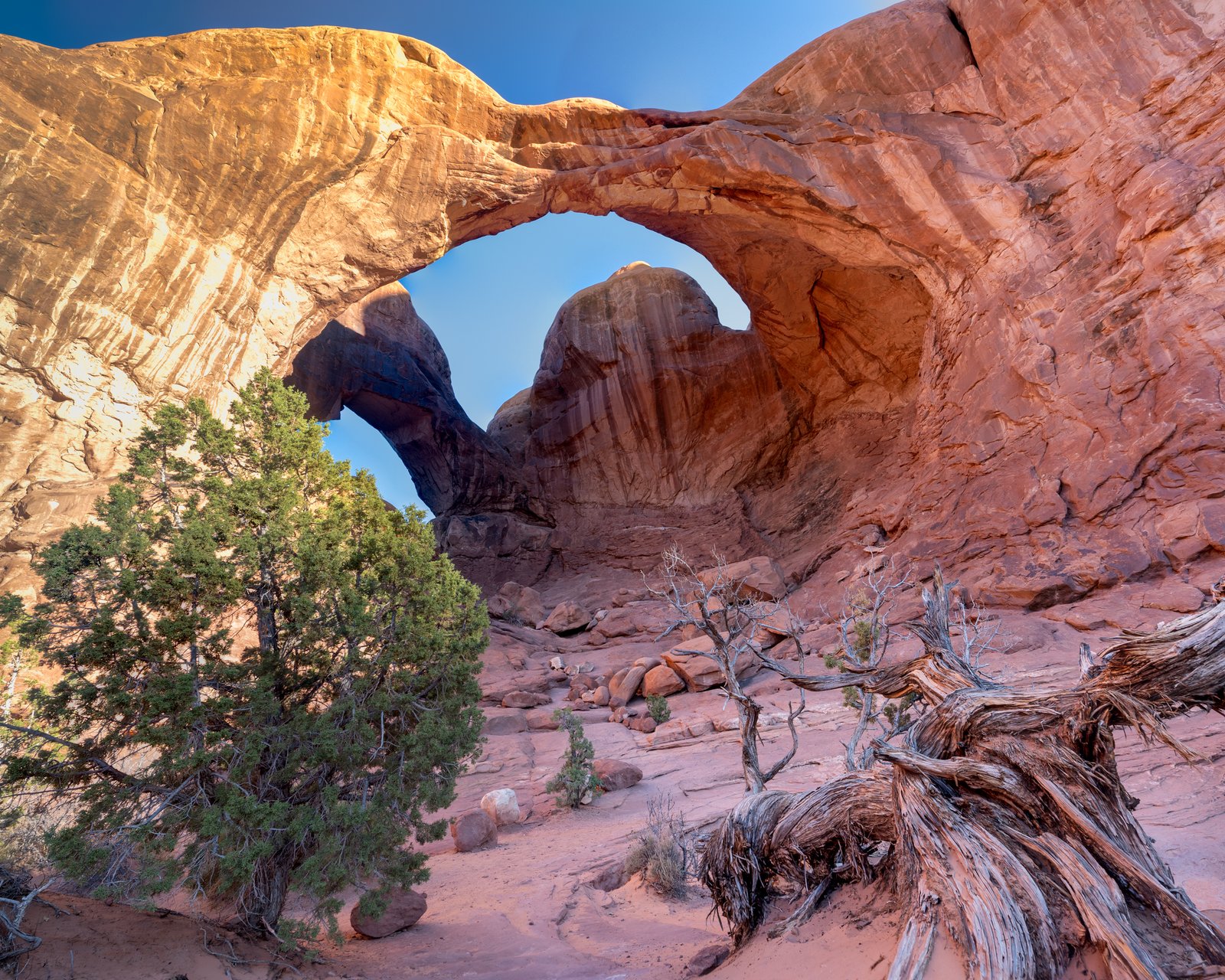
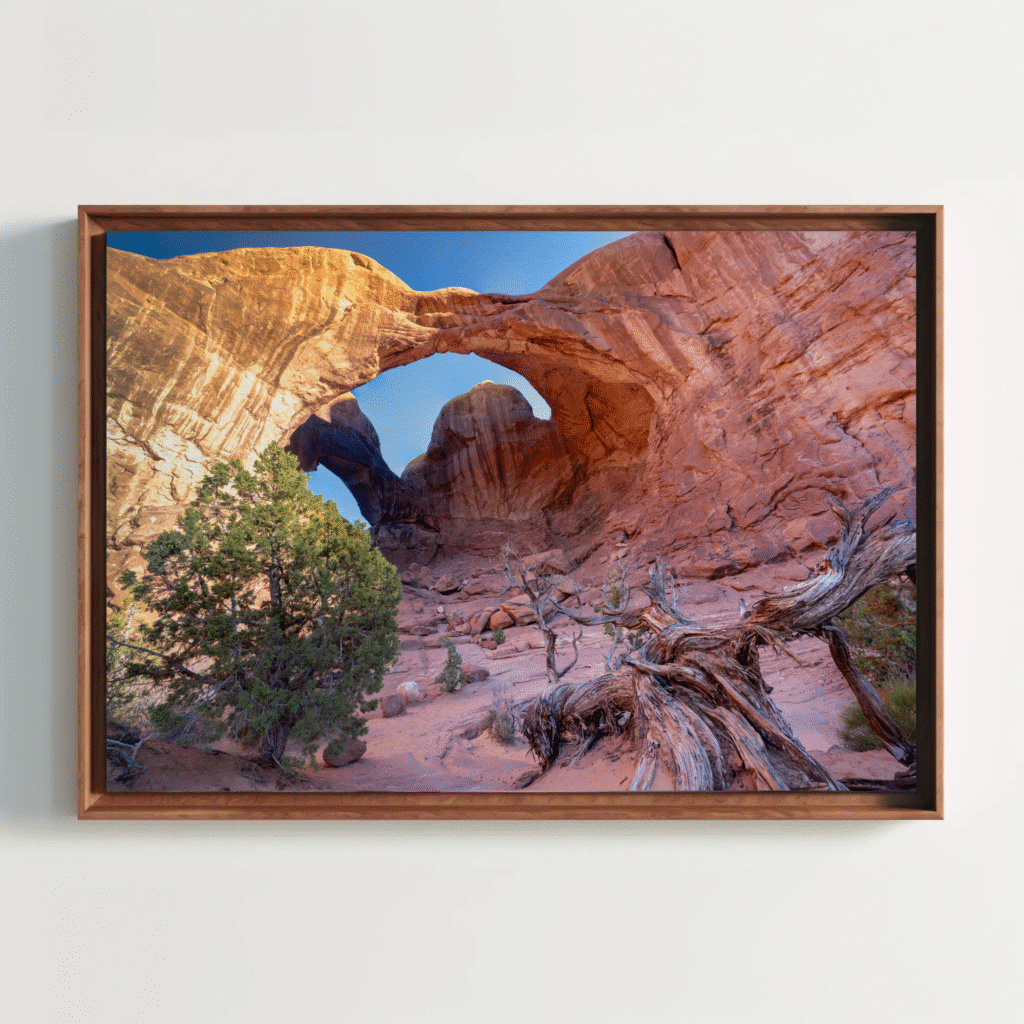
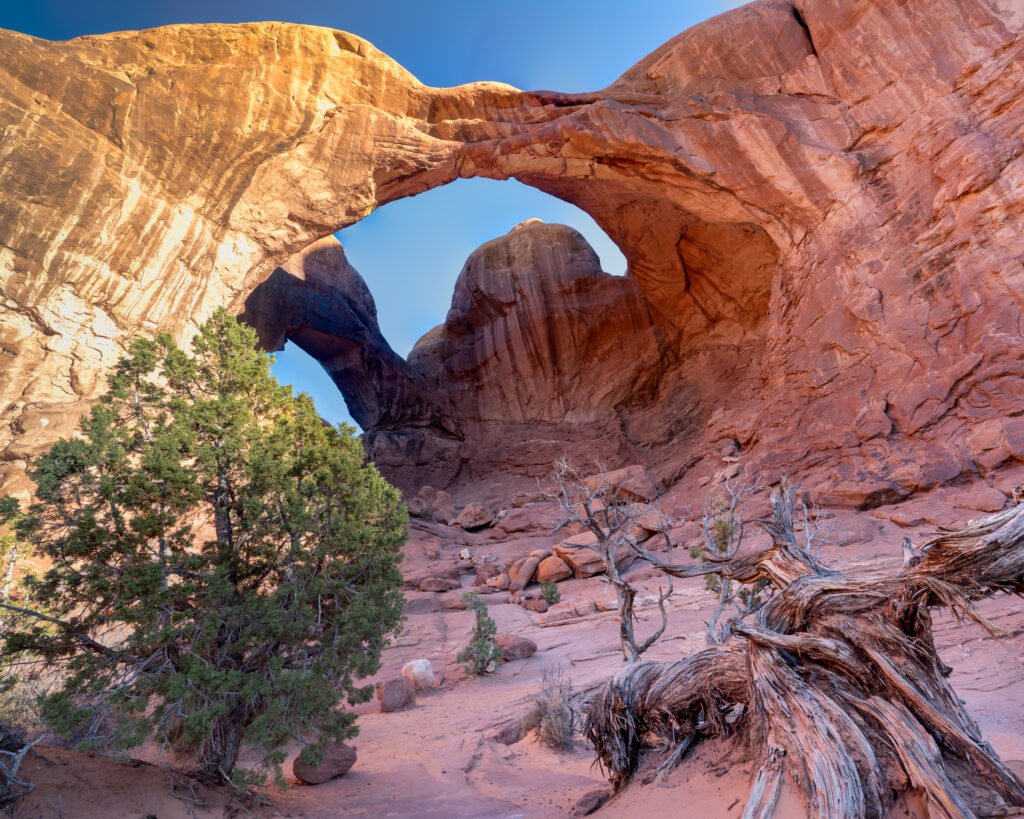
    In 1983, I found myself standing at the base of Double Arch in Arches National Park—a young first responder with a bad ankle and an even stronger sense of wonder. The sandstone curves towered above me, glowing in the Utah sun, and I could already see the photograph I wanted to create. But between me and that perfect composition was a steep, uneven descent I simply couldn’t manage at the time. So I did what dreamers often do—I made a promise to return.

    Years turned into decades. Life moved on, my ankle healed, and photography grew from a hobby into a calling. When I finally returned in 2017, eager to finish the story I’d started all those years ago, fate had other plans—the Double Arch area was closed for renovation. I left once more with the same unfinished dream echoing in my mind.

    Fast forward to 2024. I made my third attempt, this time with experience and better gear. The light was perfect, the sky breathtaking—but my lens wasn’t wide enough. The shot I envisioned simply wouldn’t fit. I stitched together a panorama, only to discover later that parallax distortion ruined the image. Close, but not quite.

    Then came 2025. A government shutdown threatened to close the parks, but Arches stayed open just long enough for me to try again. With my wide-angle lens and years of lessons behind me, I stood once more before those twin spans of stone. As I set up my tripod and looked through the viewfinder, I couldn’t help but smile—the juniper in the foreground had aged, twisted, and weathered, much like me.

    This time, everything aligned. The light, the lens, the patience, and the quiet persistence that only comes with time. When I finally pressed the shutter, I wasn’t just capturing a landscape—I was honoring a forty-year promise to myself.

    The finished image now hangs on my wall, not as a trophy, but as a reminder: some visions take decades to fulfill, and that’s what makes them truly worth the wait.

    Shop This Image

  • Rust and Steel: A Different Golden Gate

    Rust and Steel: A Different Golden Gate

    A Fresh Look at an Iconic Landmark

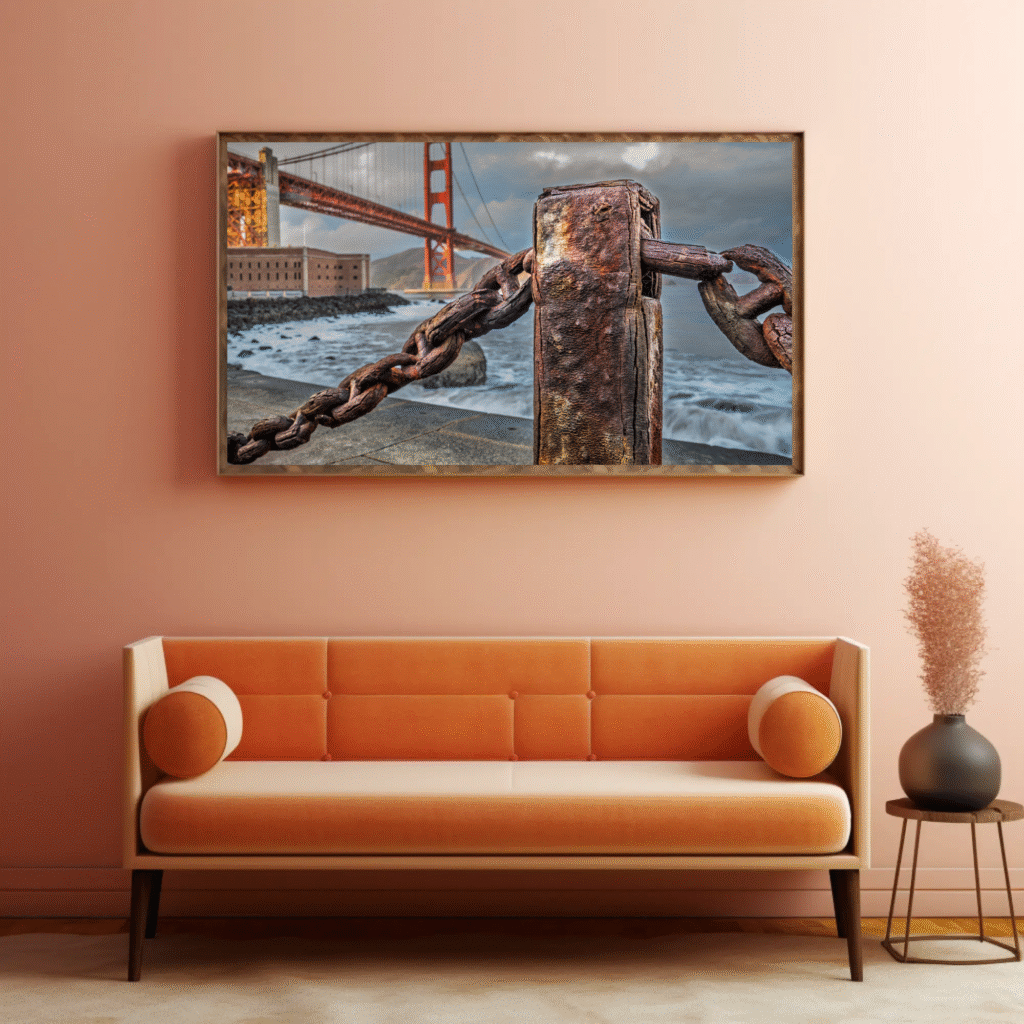
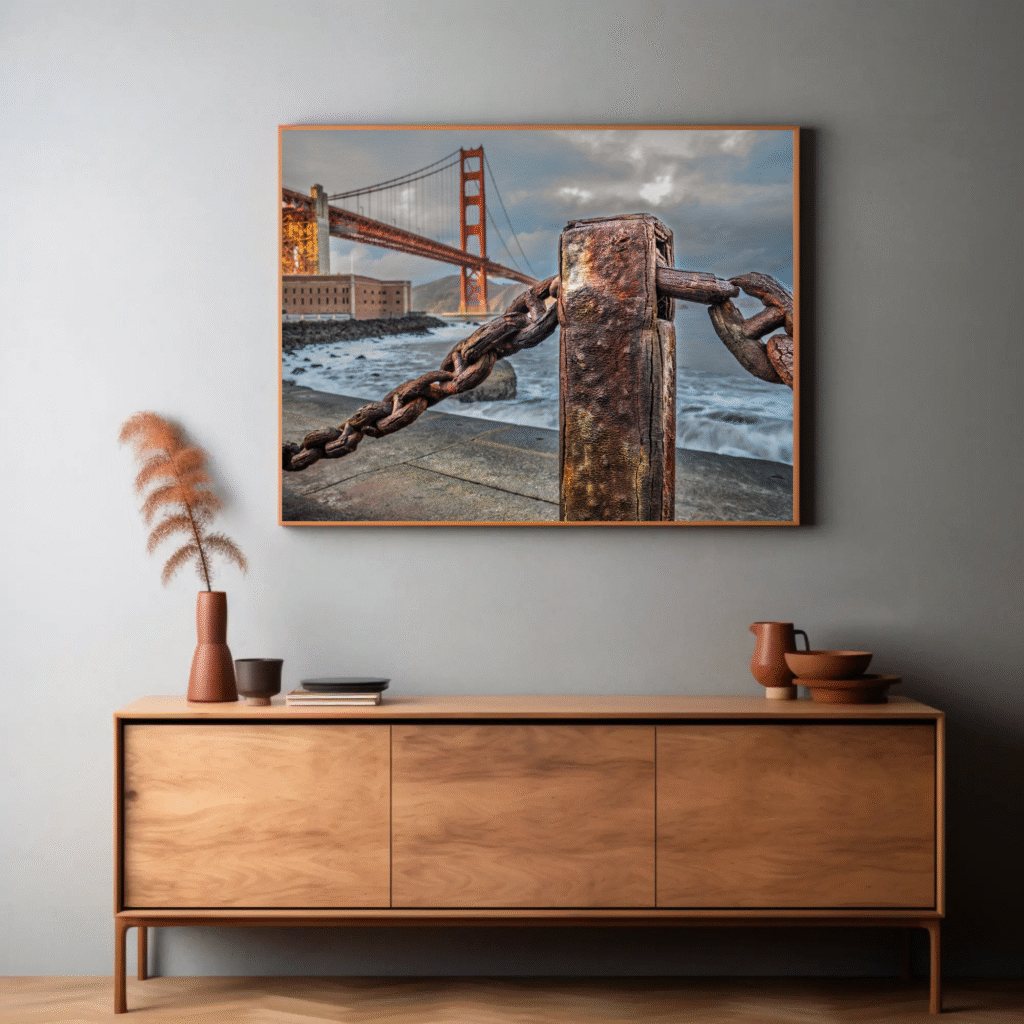
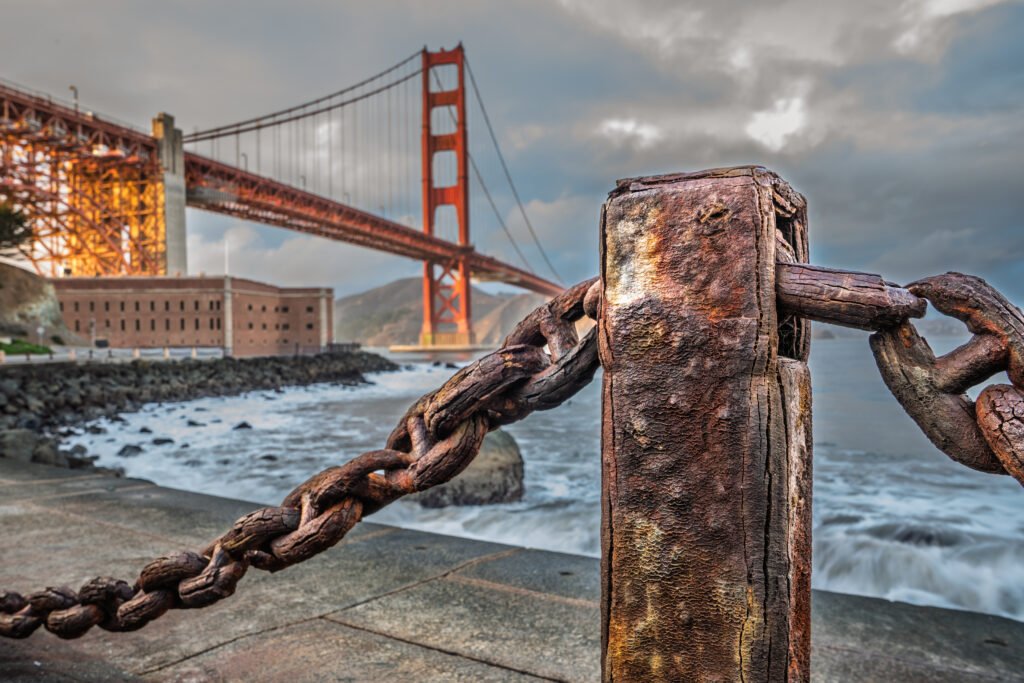
    The Golden Gate Bridge is one of the most photographed landmarks in the world. Its soaring orange towers and sweeping span across San Francisco Bay are instantly recognizable, even when blurred or partially hidden. Yet sometimes the best photographs aren’t about capturing the obvious view, but about finding a new angle that feels both familiar and strangely unfamiliar.

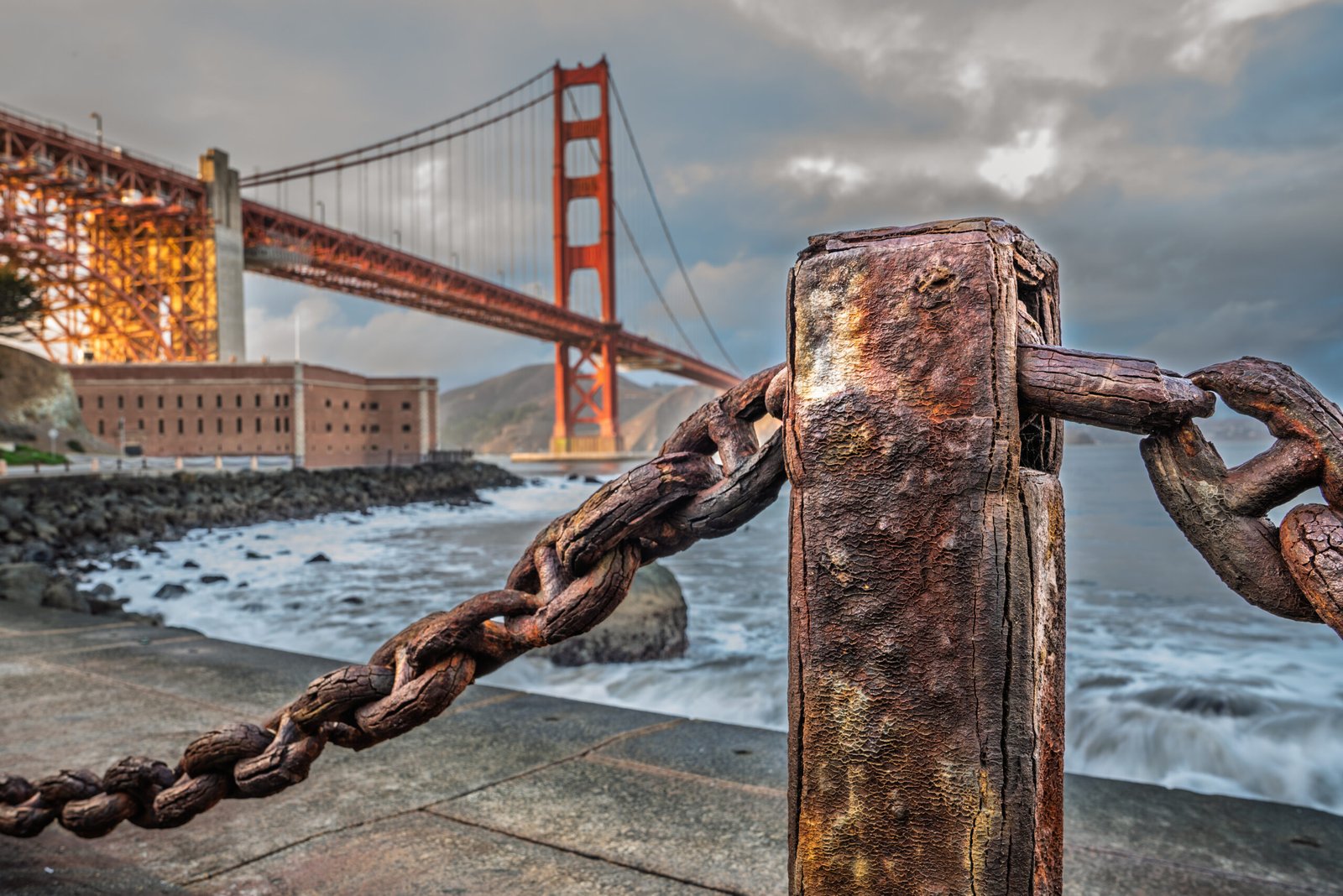
    That’s exactly what happened on this walk along the shoreline. Instead of aiming my camera directly at the Golden Gate, I found myself drawn to a rusted chain post, weathered by years of salt spray. What started as a casual stop quickly turned into a lesson in patience, balance, and composition.

    Finding Beauty in Rust and Texture

    We hadn’t planned this shot. My wife and I were wandering near the waterfront when I noticed the massive chain, corroded and clinging stubbornly to its post. The textures were impossible to ignore—flakes of rust, cracks in the steel, and the unmistakable weight of time.

    I started circling the subject like a hawk. Crouch low, shuffle sideways, lean forward, back up—each small movement shifted the balance between the rusty steel and the blurred Golden Gate Bridge behind it. It was a compositional tug-of-war between decay and triumph, and I wasn’t sure which one would win.

    The Struggle Behind the Shot

    Of course, composing the image wasn’t the only challenge. The ground was slick with salt water, which made kneeling impossible. So there I was, bent over at the waist like an aging gymnast attempting a warm-up routine. At 60, my back, knees, and balance all decided to betray me at once. Each adjustment of the tripod felt like an Olympic event. My wife, ever supportive, kept her distance—probably so she could honestly say later, “I have no idea who that man was wobbling like a folding chair about to collapse.”

    And yet, the struggle made the final composition all the more satisfying. The rusted chain claimed the spotlight in sharp detail, while the bridge softened into a hazy silhouette in the background. It wasn’t the classic postcard view, but something more personal: a photograph about endurance, time, and the beauty of contrasts.

    An Unfinished Conversation with the Golden Gate

    Even as I packed up my gear, I knew I’d want to return. I imagined this same scene in blue hour, with the bridge’s lights glowing against the twilight sky, the chain still anchoring the foreground. For now, though, I carry this image as both a small victory and an unfinished conversation with the Golden Gate.

    It’s a reminder that fine art photography isn’t just about capturing perfection. Sometimes it’s about the weathered details at your feet, the unexpected textures, and the willingness to bend—literally—to find a new perspective.

    This and many other photos are available in paper prints, framed paper prints, canvas, metal, and even printed on gift items.

  • “Camera On, Dude”: A Brooklyn Rooftop, a Family Weekend, and a Fleeting Moment

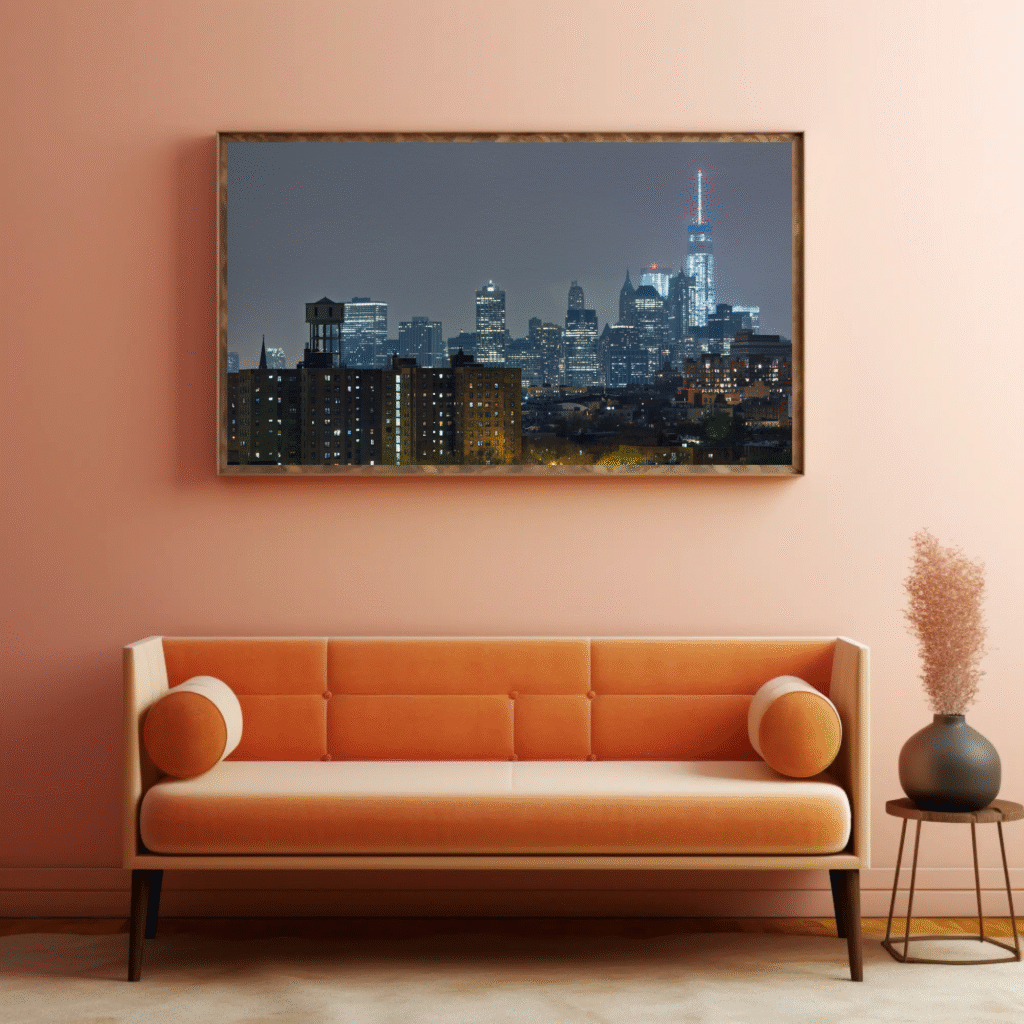
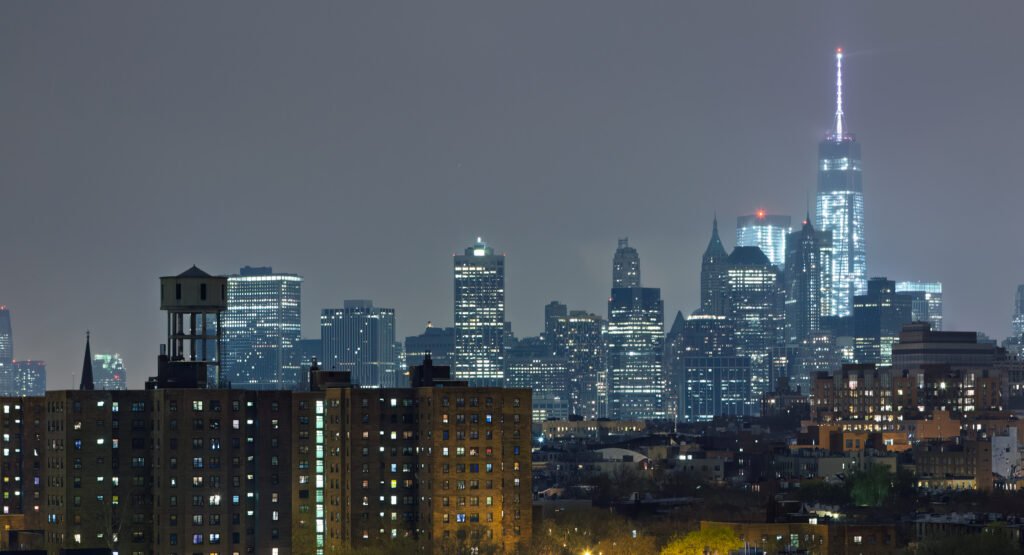
    There are certain trips that linger in your memory long after the bags are unpacked. One of those for me was a long weekend in Brooklyn with the kids. We filled the days with subway rides, pizza slices, laughter, and the kind of endless walking that only New York City demands. But for me, some of the most meaningful moments happened at night—alone on the rooftop of our Brooklyn hotel, camera in hand, staring out at the glittering Manhattan skyline.

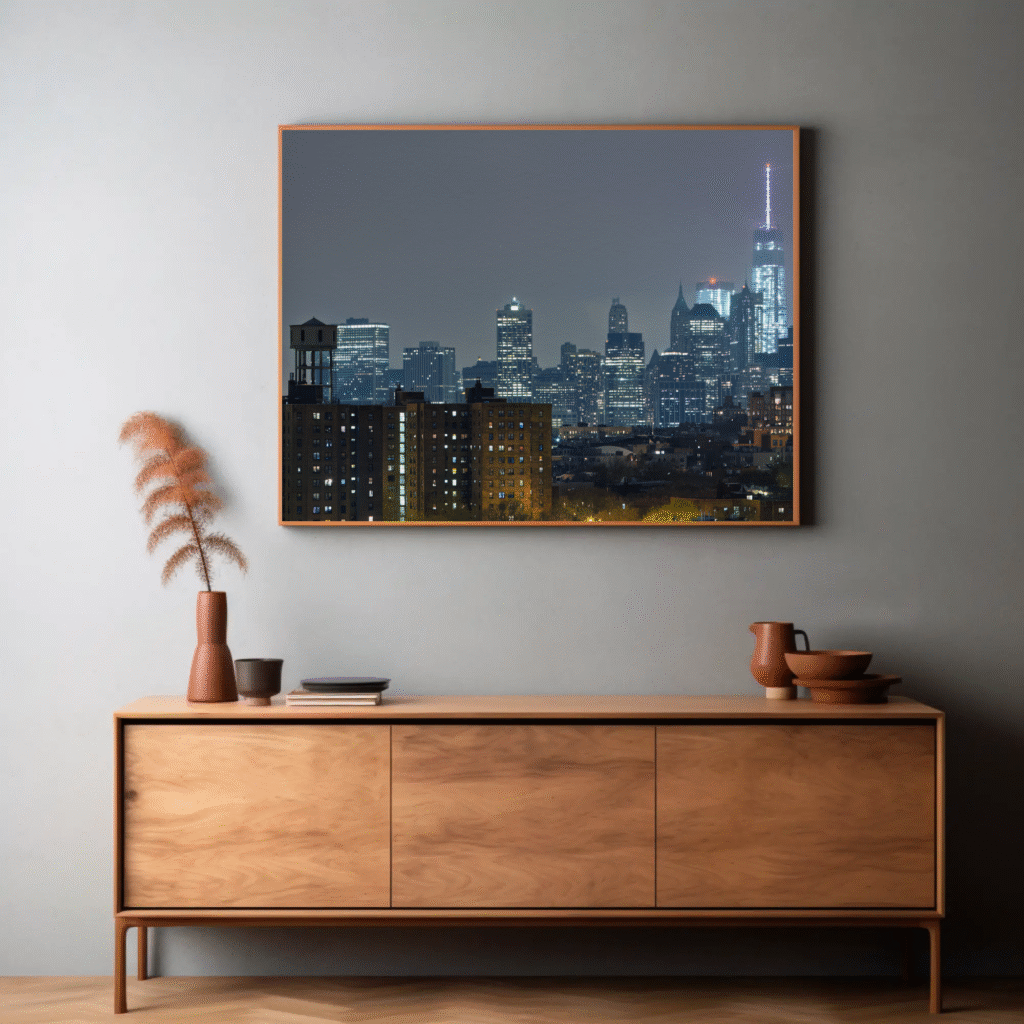
    I must have slipped up there half a dozen times that weekend, drawn by the energy of the city that never seemed to sleep. The view was breathtaking—towering buildings, thousands of glowing windows, and the Freedom Tower shining like a beacon above it all. One night around 11 p.m., I captured the photograph you see here. It wasn’t just another picture of New York City; it became a time capsule of who we were then as a family.

    That night, as I quietly put on my jacket, my oldest stirred and asked, “Where are you going, Dad?” I whispered back, “To take pictures of the city.” She blinked, smiled, and said something that has stayed with me all these years: “Camera on, dude.”

    It was such a simple phrase, but it felt like a reminder to stay present. To keep noticing. To hold onto the fleeting beauty of family, travel, and the small in-between moments that slip away too quickly.

    Looking back now, with the kids grown and living their own lives, I treasure that Brooklyn rooftop even more. The city skyline is timeless, but our time with our children is not. The photograph reminds me that life, like New York at night, is brilliant and fleeting. It’s a gift to be noticed, captured, and remembered.

    Looking into Lower Manhattan from a rooftop in Brooklyn at night in foggy weather with the Freedom Tower

    So whenever I see that image, I hear my daughter’s voice again: “Camera on, dude.” And I remember to keep the lens open—not just on the city, but on the moments that matter most.

  • Milky Twilight – My first night in the Badlands

    Milky Twilight – My first night in the Badlands

    After a long day of RV travel and setup just outside of Badlands National Park, I found myself drawn back outside as twilight gave way to night. The air was still, and the last sliver of golden light clung to the western horizon as I set up my gear. The park’s surreal landscape may be its daytime claim to fame, but after dark, the sky steals the show.

    As the light faded, the stars began to pierce through—first a few, then hundreds, then thousands. The Milky Way arched overhead, its galactic core burning bright in the southern sky. It always amazes me how alive the night can feel in these remote places. There was no wind, no traffic—just the hum of my intervalometer and the sudden, haunting howls of coyotes echoing in the distance. It’s that kind of eerie sound that makes your neck tingle, even when you know you’re safe. I found myself subconsciously drifting closer to the camper, the glow of its interior light a quiet comfort in the dark.

    In this photograph, I tried to capture not just the sky, but the feeling of that moment. The open prairie, lit faintly by starlight, adds context and contrast to the brilliance above. The soft lights on the horizon remind us of the few others out there, tucked away in their own corners of the dark. It’s a reminder that beauty doesn’t just live in national parks or famous overlooks—it lives in the spaces between, in the quiet, forgotten stretches of the land, where the night sky tells its ancient story to anyone willing to look up and listen.